Clinical Voice Studies Lab
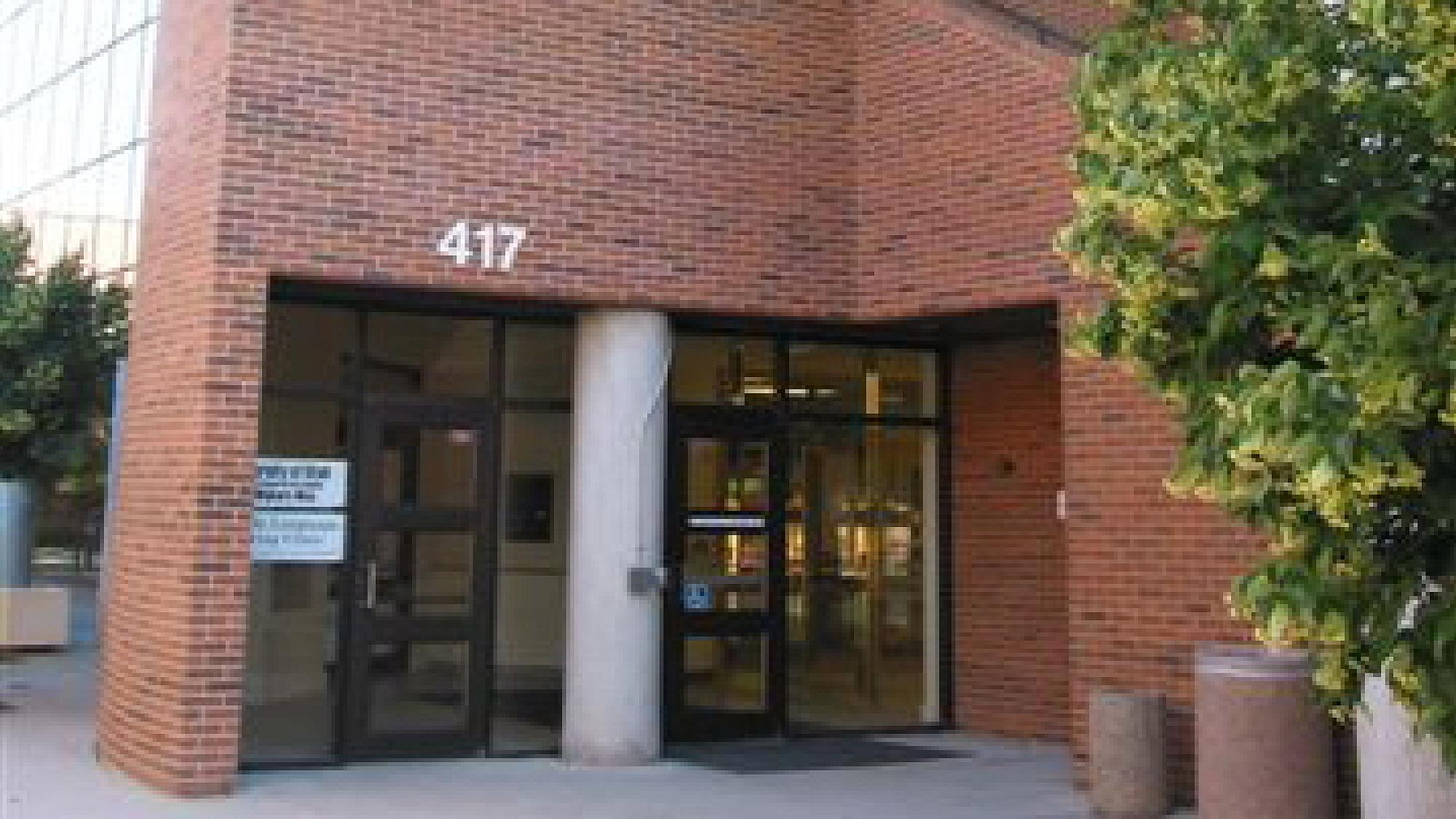
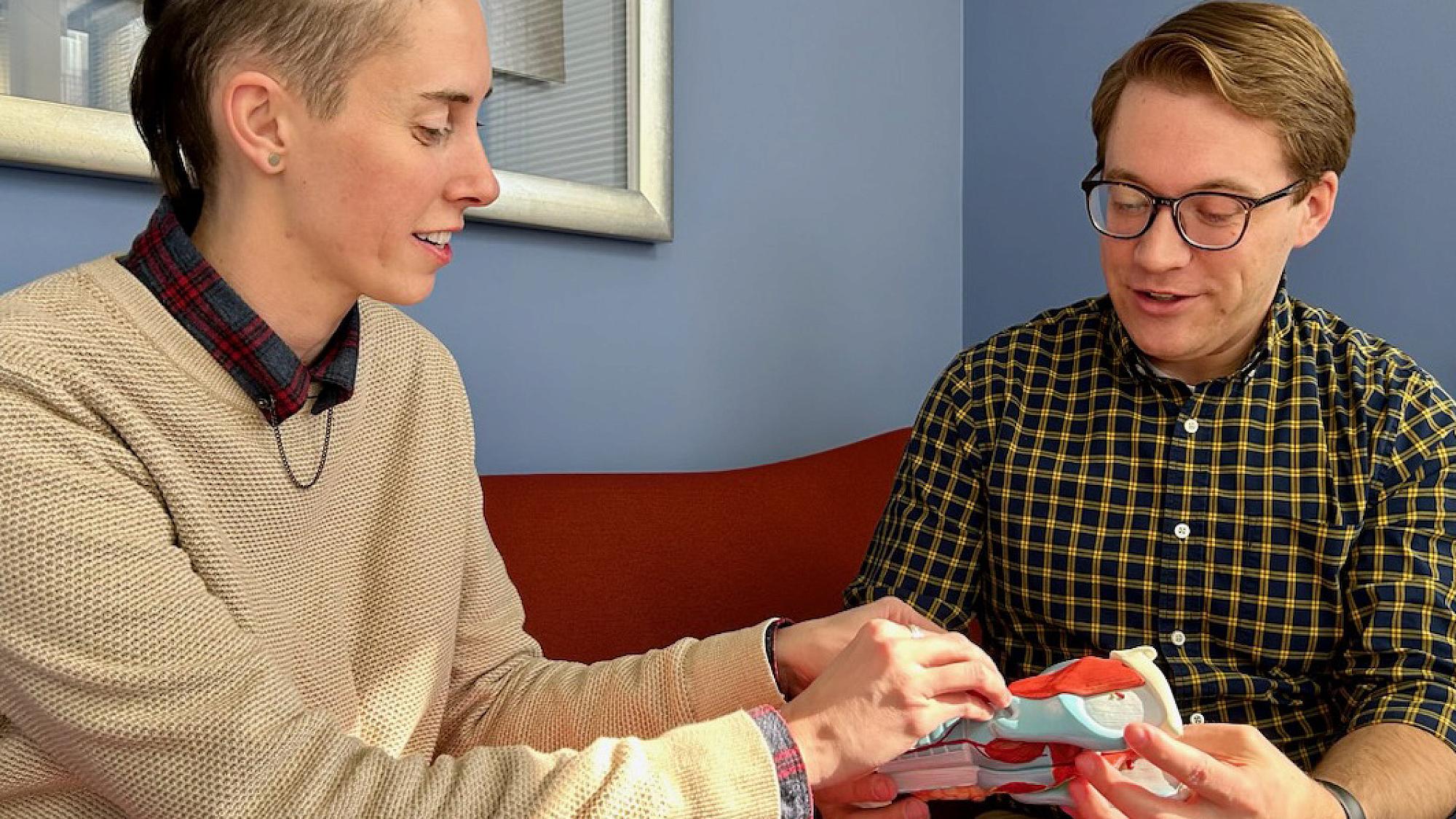
The Clinical Voice Studies Lab focuses on the evaluation and treatment of voice and related issues. Located in the University of Utah Speech-Language-Hearing Clinic, our research investigates client-centered evaluation methods and treatment modalities in gender-affirming voice care and Parkinson's related voice problems.
About the Lab
The Clinical Voice Studies Lab serves on the Transgender Health Program at University of Utah Health to improve quality health care in a trans-affirmative environment.
We are also Utah's SPEAK OUT! Therapy and Research Center for individuals diagnosed with Parkinson's disease. As such, we are interested in optimizing treatment techniques for patients with Parkinson's related voice problems.
Recent Publications
-
- Myers, B.R., & DeLong, C. (2025). Benefits of Gender-Affirming Voice and Communication Training for Young People. Transgender Health, 0(0). https://doi.org/10.1089/trgh.2024.020
- Myers, B.R., Jacobs, C., Buxo-Lugo, A., & Watson, D. (2025). The role of surface-level feature cues in phonological encoding processes. Journal of Memory and Language.
- Booz, J.A., Ferguson, S.H., & Myers, B.R. (2025). Perceived Gender in Clear and Conversational Speech. Language and Speech, 0(0). https://doi.org/10.1177/00238309251336781
- Myers, B.R. (2025). Gender-Affirming Voice Care. In: J.C. Stemple, N. Roy, & B.K. Klaben (Eds.), Clinical Voice Pathology: Theory and Management (7th ed.). Plural.
- Myers, B.R., Castro, M.E., Sund, L.T., Zughni, L., Diaz, J., & Lloyd, A.T. (2024). Building a Community for Clinical Fellows in Voice and Upper Airway Disorders. ASHA Perspectives.
- Myers, B.R., Pierce, J., & Mathy, P. (2024). The Utah Gender Presentation Scale for Communication (U-GPS): Development and Validation of a Measure of Voice-Related Gender Incongruence. Journal of Speech, Language, and Hearing Research.
- Myers, B.R. (2022). Related clinical issues. In N. Mihalopoulos & A. Dell (Eds.), Pediatric Transgender Healthcare. SpringerBrief.
- Myers, B.R., Mathy, P., & Roy, N. (2022). Behavioral treatment approaches to lowering pitch in the female voice. Journal of Voice.
- Myers, B.R., Hary, E., Ellerston, J., & Barkmeier-Kraemer, J. (2022). Telepractice for voice evaluation and treatment: Tailoring to specific populations. ASHA Perspectives.
- Myers, B.R., & Watson, D.G. (2021). Evidence of absence: Abstract metrical structure in speech planning. Cognitive Science.
- Myers, B.R., Titze Cox, K., & Manternach, B. (2020). Vocal health screenings for university students: The why and the how. Voice and Speech Review. *Awarded best paper of the year by the journal.
- Myers, B.R., & Bell, T. (2020). Adapting vocal function exercises for voice masculinization. ASHA Perspectives.
- Myers, B.R., & Watson, D.G. (2019). Paying the meter: Effect of metrical similarity on word lengthening. Psychonomic Bulletin & Review.
- Myers, B.R., Lense, M.L., & Gordon, R.L. (2019). Pushing the envelope: Developments in neural entrainment to speech and the biological underpinnings of prosody perception. Brain Sciences.
- Paige, C., Hopewell, B.L., Gamsarian, V., Myers, B.R., Patel, P., Garrett, C.G., & Francis, D.O. (2018). Characterizing the normative voice tremor frequency in essential vocal tremor. JAMA Otolaryngology Head and Neck Surgery, 144(12), 1169-1173.
- Myers, B.R., & Finnegan, E.M. (2015). The effect of articulation on the perceived loudness of the projected voice. Journal of Voice, 29(3), 390.e9–15.
The Utah Gender Presentation Scale for Communication (U-GPS)
The U-GPS is a patient-reported outcome measure designed and validated to evaluate gender incongruence related to communication. The scale may be used by anyone on the gender spectrum.
The U-GPS is available for free download by speech-language pathologists, gender care providers, researchers, and anyone who would like to assess their own communication-related gender incongruence.
Contact Brett Myers to receive the U-GPS document.

Contact Us
Speech-Language-Hearing Clinic
417 Wakara Way
Salt Lake City, Utah 84108